
 العربية


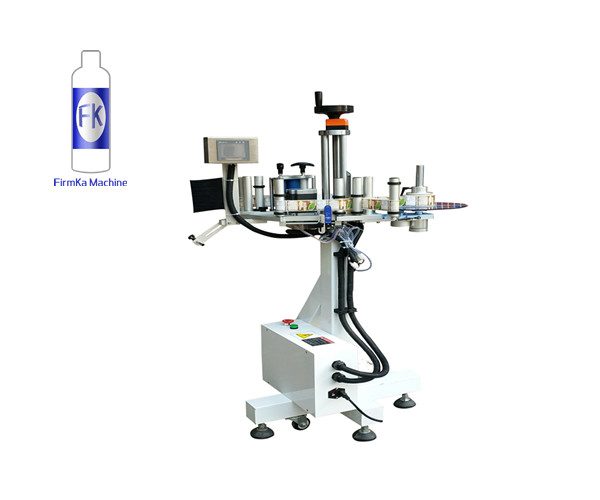
Here we would like to share sticker label making details as following,
1. Surface material. The firmness of the label is the key to success. Therefore, the surface material is required to have a certain strength and hardness, and the stiffness of the label is related to the thickness of the material and the area of the label. Therefore, when using a soft film material, its thickness should be appropriately increased, generally controlled above 100um. Thin paper materials, such as 60 to 70 g / m2 paper, are generally not suitable for large labels, but are suitable for processing into small labels, such as price labels often used in supermarkets.
The poor stiffness of the label will cause the label to fail to be labeled, or the label will be rerolled together with the backing paper, which will cause automatic labeling to fail.
2. Release force. Also called peeling force, is the force when the label is detached from the backing paper. The release force is related to the type and thickness of the adhesive and the silicon coating on the surface of the backing paper. It is also related to the ambient temperature at the time of labeling. The release force is too small, and the label is easily detached from the backing paper during the conveying process, which causes the label to drop; while the release force is too large, the label is difficult to detach from the backing paper and cannot be released. Therefore, various technical indicators should be comprehensively controlled to make the release force within a reasonable range.
3. Backing paper. It is also an important indicator for controlling automatic labeling. Requires backing paper:
a. The surface is evenly coated with silicon, and the release force is consistent;
b. Uniform thickness, with a certain tensile strength, to ensure that it does not break when labeling;
c. Have good light transmittance, ensure that the sensor can correctly identify the position of the label
4. Processing quality: After cutting, the two sides of the backing paper should be flat and free of breaks to avoid the backing paper breaking when the tension changes. When cross-cutting, avoid cutting through the base paper or destroying the silicon-coated layer. The bottom paper and the silicon-coated layer are damaged, and the base paper may be broken or the adhesive in the label penetrates into the base paper.
5. Remove static electricity from the roll label before labeling, because static electricity will cause the label not to be labeled or labeling inaccuracy.


