
 العربية


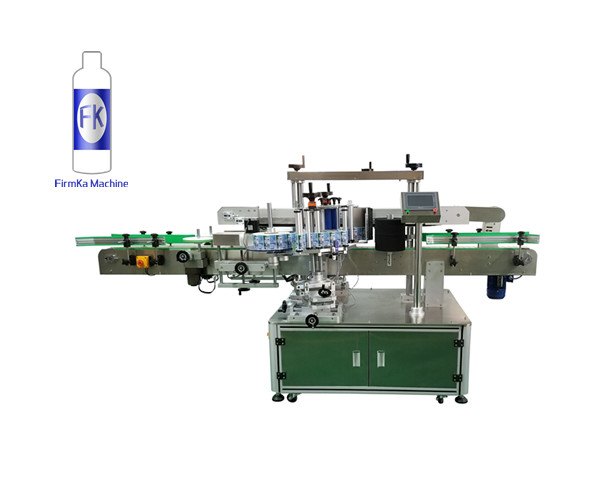
Self-adhesive labels are also called self-adhesive labels. The material is made of paper, film or other special materials. The back side is coated with adhesive and a silicon-coated protective paper is used as the backing. Become a finished product label. Compared with traditional labels, self-adhesive labels have the advantages of no need to apply glue, no paste, no dipping in water, no pollution, and save labeling time. They have a wide range of applications and are convenient and fast.
Self-adhesive materials are usually printed and processed on label linkages. The most common form of printing is relief printing, and other printing methods are also used. The common faults in the printing stage are roughly the following:
Trouble one: The ink layer on the surface of the printed label is not dry, drying slowly or the ink layer will be wiped off
Reason: The printing ink layer is too thick, the ink volume is too large, and the additives used in the ink are not suitable, the ink is denatured or the type of ink used is not suitable, etc. will cause the printed label ink layer to dry, slow drying or the ink layer wipe It will fall; in addition, the machine runs too fast and dry.
Solution: 1. Use the method of deep ink and thin printing to reduce the thickness of the ink layer; 2. Use special ink that dries quickly; 3. Use the matching additives and add the matching desiccant; 4. Take measures to extend the printed matter Drying or curing time; 5. Raise the room temperature, exhaust air properly, and accelerate the drying speed of the ink.
Fault 2: The printing ink layer on the surface of the film has poor adhesion and easy to drop ink
If the surface of the film is not corona-treated, or the surface tension of the film is lower than the surface tension of the ink, the ink is not easy to adhere to; the unused ink does not match the characteristics of the film material or the special ink is not used. ; And the use of expired or invalid inks inevitably occur such failures. In addition, the power of the drying device (UV or infrared hot air drying) is low, which prevents the ink from drying completely or the printing ink layer is too thick, the amount of ink is too large, and the viscosity of the ink is too rough to make the ink brittle after a long time of drying, which will also cause the film The surface printing ink layer has poor adhesion fastness, easy to drop ink.
Solution: To increase the surface tension of the printing material, it is required that the surface tension value should reach more than 38 dynes / cm; 2. The rotary label machine should be installed with a corona device to increase the surface tension of the film; 3. The transparent solvent ink can be used first Make reservations to improve the surface tension of the printing materials; 4. Select special inks and matching additives that match the printing materials; 5. Increase the drying or curing power, or reduce the running speed of the machine, increase the drying time; 6. Printing inks The layer should be as thin as possible, and the amount of ink should be as small as possible. If necessary, it can be printed multiple times in a single color; 7. It is recommended to perform UV glazing after printing to protect the printing ink layer and increase the adhesion fastness of the ink layer.
Trouble three: After the end of the fragile paper of the roll is infiltrated with glue, it cannot be unwound for printing
Reason: When slitting and rewinding small rolls, the rewinding tension is too large, causing the rewinding to be too tight, which will cause this failure; the storage or printing workshop temperature is too high will also cause this failure; and the extrusion or the storage time is too long. One of the reasons for this failure.
Solution: 1. In addition to improving the corresponding storage and processing conditions for the above reasons, alcohol can also be used to wipe the end surface of the glue, so that the adhesive is diluted, and its viscosity is reduced to facilitate unwinding; 2. Gently unwind, on both ends Powder and re-rewind slowly; 3. The improved roll self-adhesive material should be printed and die-cut at a slow speed on the label machine for intermittent paper feeding.
Trouble four: After printing, the film surface is partially deinked-the ink adhesion is not consistent
Reasons: One of the multi-color overprinting, the underlying ink is covered by the surface ink before it is completely dry; second, the ink of the same color exposed to the outside has been completely dried because the ink layer is too thick, and the ink pressed underneath is still not available Dry; third, the UV curing function of the monochrome group is insufficient.
Solution: 1. Reduce the thickness of the ink layer; 2. Increase the curing power of the VU drying device; 3. Reduce the speed of the machine and increase the ink curing time. Monochrome multi-station curing can be used; 4. The process design should be as much as possible To avoid overlapping printing of inks, a process of parallel printing of the edges of the graphics can be used; 5. Increase the power of the corona treatment device, increase the surface tension of the printing material, make the ink easier to dry adhere, thereby increasing the adhesion of the ink; 6. Use fast curing ink or add photosensitizer (drying agent) to the ink.
Trouble five: paper materials fall off
Reasons: The quality of the paper itself is poor, and the surface coating has a low firmness. It is easy to fall off powder; the humidity of the environment or the problem of the material itself makes the surface strength of the printing material coating decrease or the ink viscosity is too large, which is also easy to cause powder fallout; Related to the press side of the label.
Solution: 1. Select high-quality printing materials, especially when printing on a large area; 2. Reduce the viscosity of the ink, require the viscosity of the printing ink used in each color sequence to decrease sequentially; 3. Improve the storage environment of the material and the printing environment, reduce the environment Humidity; 4. The process design is solidly printed as flat screen printing; 5. Before the official printing, empty paper is used for pre-printing, and the floating powder can be removed; 6. Change the printing equipment printing method to reduce the printing contact area.


